Protagonist:
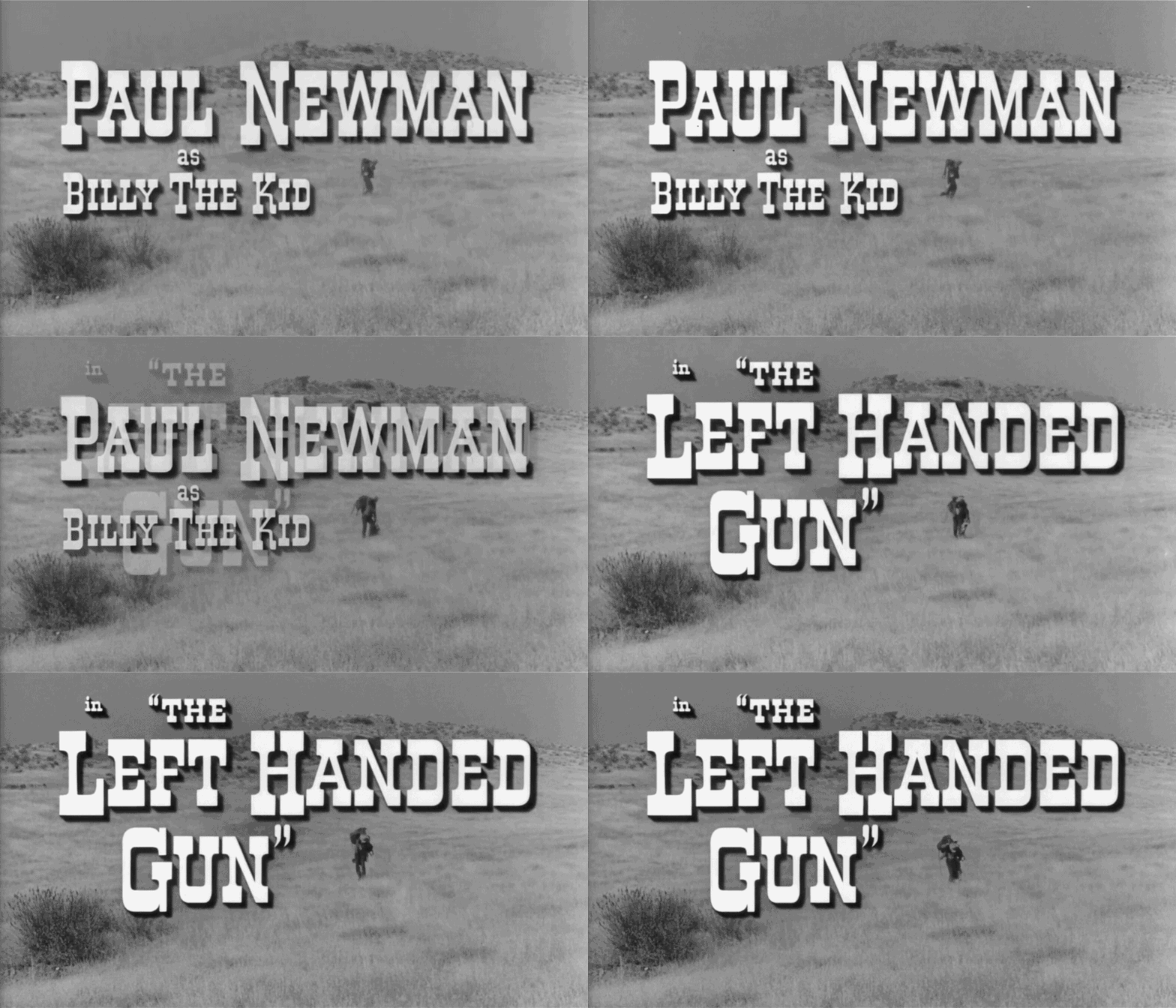
Billy the Kid (played by Paul Newman)
Goal (surface):
Avenge the murder of his mentor and survive as an outlaw
Goal (deeper/psychological):
Find belonging and validation; cope with abandonment and betrayal through violence and identity-building
Inciting incident:
The killing of Tunstall (his father figure), which pushes Billy into revenge and outlaw life
Antagonists:
Pat Garrett (lawman and former ally), the corrupt power structure behind Tunstall’s death, and society itself rejecting Billy
- Billy the Kid, anti-hero and self-destructive gunslinger
Story engine:
A tragic escalation. Each act of revenge deepens Billy’s isolation and makes his downfall inevitable
Core theme:
The myth vs. the reality of outlaw identity; how violence and ego distort a wounded psyche
POV / Narrative perspective:
Closely aligned with Billy, often framing events through his emotional volatility and subjective experience
Key turning points / Midpoints:
- Billy kills in revenge, cementing his outlaw status
- His bond with allies fractures as his behavior becomes erratic
- Pat Garrett transitions fully into his role as Billy’s pursuer
- Billy’s increasing instability isolates him from everyone
Resolution:
Billy is ultimately killed by Pat Garrett, completing the tragic arc of self-destruction
Arc contrast:
Billy moves from wounded, impulsive youth to fully mythologized outlaw, while Garrett shifts from companion to agent of order
Visual Style:
Stylized for a Western, moody compositions, psychological framing, and expressive use of space reflecting Billy’s inner turmoil
Editing style:
More modern and character-driven than typical Westerns of the time, emphasizing rhythm and emotional beats over pure action clarity
Performance:
Highly internal and erratic lead performance by Newman, less stoic, more vulnerable and unpredictable than traditional Western heroes, Towering and emotionally manipulative.
Capsule
The Left Handed Gun is a reckoning of violence, framing Billy’s killings as ruthless, reckless, and disturbingly fetishized. It twists the Western mythos sideways, exposing the instability beneath the legend. What emerges is not a heroic outlaw, but a misguided youth thrown into a world that demands repugnant acts of vengeance, creating one of the most compelling Billy the Kid stories put to film.
Paul Newman plays Billy as emotionally immature, charging headfirst into confrontation while paradoxically feeling detached from his own actions, like a passenger with no agency in his destructive impulses. He may be too expressive for a conventional Western framework, but that works in the film’s favor. Newman elevates the material through his eyes alone, conveying a lost soul hurtling toward self-destruction.
Even at his most indiscriminately ruthless, Billy retains flashes of humanity, whether in the McSween house fire or the final shootout. Still, an undercurrent of cruelty hangs over him, casting a shadow that defines how others relate to him. His closest companions, Pat Garrett (James Dehner), Charlie (James Congdon), and Mo (Hurd Hatfield), orbit him in a complicated love-hate dynamic. They admire his freewheeling spirit, but recoil from the volatility and rage they cannot share.
The film roots Billy’s instability in youth and loss. The murder of his mentor, brief as that relationship may be, ignites a buried resentment toward the world and provides the psychological justification for his violence. That emotional core is reinforced visually through the work of Peverell Marley, whose framing captures Billy’s inner chaos. Whether in suffocating close-ups or isolating wides, the camera places us inside his fractured perspective.
This is an emotionally explosive Western, a rarity in a genre often defined by restraint. It strips away myth in favor of psychological truth, and in doing so, stands as perhaps the definitive cinematic portrait of Billy the Kid.
 Weird Cinema