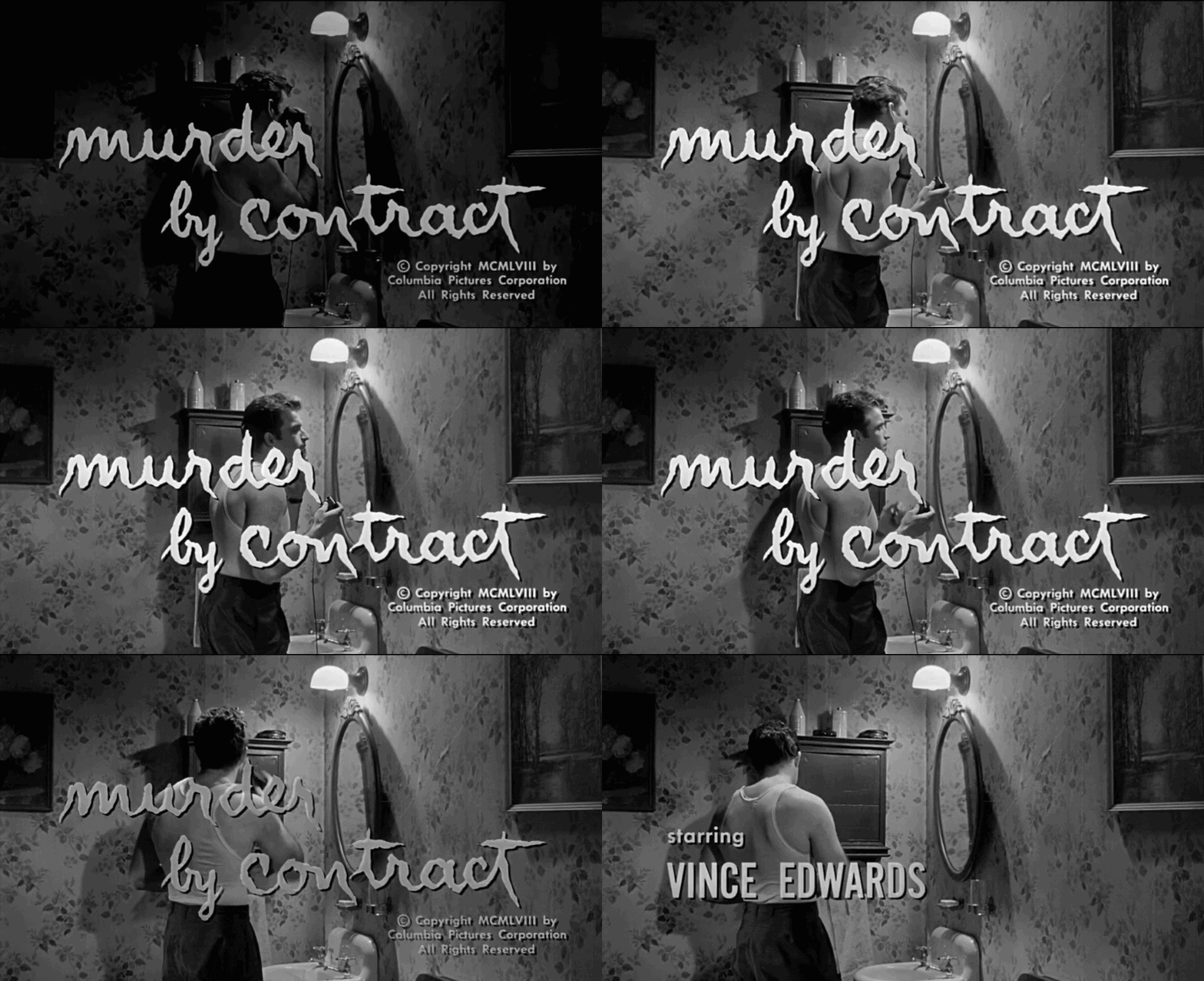
Protagonist: Claude (Vince Edwards), hitman
Goal (surface): Earn kill contracts
Goal (deeper/psychological): to make enough money to pull himself out of his idealogical emptiness of a life
Inciting incident: The need to pull himself out of his ideological loser attitude and rushes to make money quick
Antagonists: The police, other hitmen, females
Story engine: episodic hitman contract kills and escalation of stakes and violence
Core themes:
– Making money supersedes morality and goodness, needing to become the ideal version of himself without fear or desire
– The detachment from connection in this world and how that pushes people even further away
– Betrayal among colleagues and society
POV / Narrative perspective: Claude third-person
Key turning points / Midpoints:
– Decides to start contract killings
– Takes on a lot of business and earns plenty of dough, exposing himself more and more
– Turns women away in apartment, showing human side
Resolution: Claude dies in the sewer at the hands of cop gunfire, showing the only realistic result of Claude’s killing spree
Arc contrast
Claude: cold and detachment > rejecting normalcy to protect himself and loses his driving force
Visual Style:
Minimalistic, low-budget, dark shadows and medium shots. For a studio 50s film, Murder by Contract has surprisingly eccentric visual language, expressing Claude’s reckless and chaotic lifestyle in one shots framing an ever maddening Claude in the center projecting mayhem
Editing style:
Many quick cutaways to unmotivated camera shots where the characters move into frame. Faster cutting style with hard cuts and cold juxtaposition that gave this film its off-kilter mood. Mixed with the bizarre but brilliant score, the economical editing allows for the atmosphere to build
Performance:
Nonchalant, pompous detachment to violence, flat, explosive delivery and deliberately cold. The film is worth a watch for Vince Edwards alone.
Capsule:
Murder by Contract centers on a noir protagonist who lacks any real capacity for feeling, treating violence as a practical means to earn money. His worldview is built on proving his masculinity and securing enough wealth to carry himself with confidence. Irving Lerner shapes Claude (Vince Edwards) with a hard edge, while drawing out an irreverent streak in Edwards’ performance that allows the film to drift into something more surreal, even faintly campy. A contract killer who organizes hits like a grocery list while imagining a long, comfortable life gives the film its off-kilter tone.
The screenplay is somewhat shortsighted and does not always push its ideas to their logical endpoint. Still, the gritty noir aesthetic and jazz-infused score reinforce Claude’s detachment from humanity and his willingness to sell his soul for very little, giving the film a weight that contrasts with its nonchalant surface. Even when the writing falters, his dialogue feels indebted to Sweet Smell of Success, delivered with a sharp, poisonous precision.
His interactions with women suggest flashes of softness, even vulnerability, before he quickly retreats into emotional rigidity. Otherwise, he remains a slick, smooth-talking hitman who lacks true control, despite convincing himself otherwise. Martin Scorsese has cited the film as an influence on Taxi Driver, particularly in its focus on isolation, routine, and moral decay.

