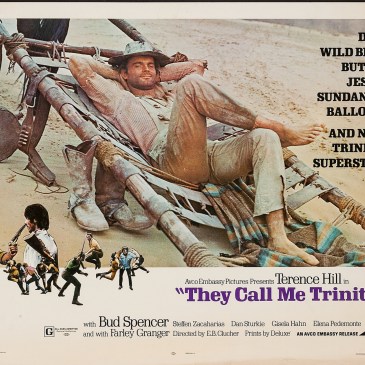
They Call Me Trinity (1970) is Enzo Barboni’s Profoundly Lazy Spaghetti Western

It’s two wandering criminals defending a separate group of cattle farming Mormons against greedy rustlers. Using religion as a story beat, the script slightly dips into pacifism and hilariously touches on Mormons’ polygamy that conveniently allows Trinity to get two women instead of one.
More They Call Me Trinity (1970) is Enzo Barboni’s Profoundly Lazy Spaghetti Western

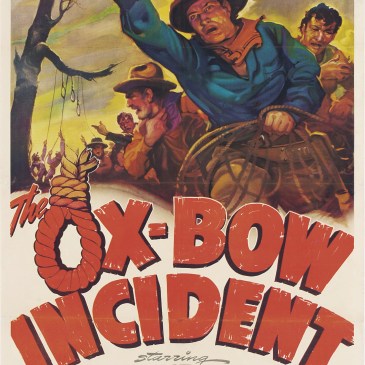
The Ox-Bow Incident a maddening one-room drama

It firmly nestles the audience into a place of distrust and anger, much like the characters. It’s an uncomfortable place because nothing the mob does fits into any modern definition of justice, but the shared mentality of the group overtakes rationality. It’s essentially a real-life horror show and digs into humans’ innate desire for violence, but plays more like a tragedy. A horrible tragedy that leaves all involved with a dirty, sinking feeling that will never leave them for the rest of their lives. 
More The Ox-Bow Incident a maddening one-room drama

Hayao Miyazaki out of retirement and set to release one last animated film: ‘How Do You Live?’

Hayao Miyazaki, a Weird Cinema favorite and beloved the world over by parents and children alike, is coming out of “retirement” to make what he calls his last film – How Do You Live?
More Hayao Miyazaki out of retirement and set to release one last animated film: ‘How Do You Live?’

The Adult Specialty Audience is DEAD

I’m back again, decrying the slow decay of the cinema, as another weekend has passed and the only movies that were seen by human eyes had the artificial glare of nostalgia attached. As if the only films worth paying for these days are one’s that allow you to talk about the original show or film in the car ride home, without having to think about the film they just watched. … More The Adult Specialty Audience is DEAD

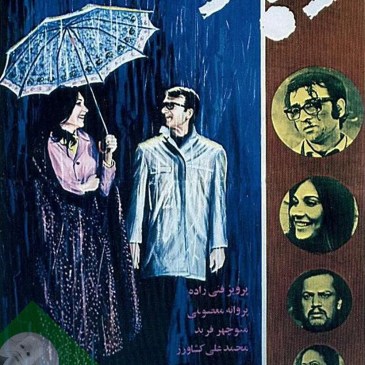
Iranian New Wave sensation Downpour (1972) is an incisive social critique

Downpour is our predilection for scandal surfacing in destructive and ignorant ways. Behram Beyzai’s vision for Hekmati’s (Parvis Fannizadeh) character was that of a humble servant of the community, within an innate sense of goodness, yet he still gets exposed inside of a communal lie meant to suppress an outsider’s influence. It’s a daring piece of filmmaking, with a provocative visual element, conveying deep seeded desire that can’t be expressed in words. It’s a poetic script, even if mired in malicious rumors … More Iranian New Wave sensation Downpour (1972) is an incisive social critique

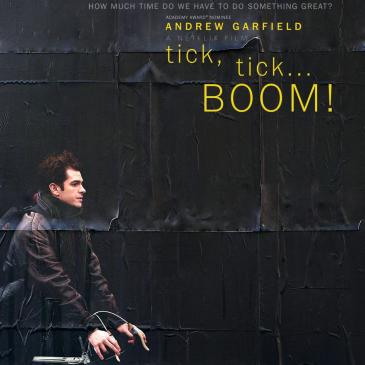
Tick, Tick…BOOM! is Andrew Garfield channeling an existential crisis in riveting performance

With the slow ticking of a wooden clock, or a bomb clicking down to detonation, Garfield channels this hectic energy and ever-present pressure to succeed and be something in his performance. The stress of being a nobody at 30, while Stephen Sondheim was on Broadway by 27. This existential crisis lays at the heart of Tick…Tick…Boom, a man grappling with the idea of failure or stagnation. Garfield juggles this overwhelming feeling while the relationships in his life hang in the balance. Through this excruciating uncertainty pops out some of the most poignant, heartfelt songs ever put on a stage. … More Tick, Tick…BOOM! is Andrew Garfield channeling an existential crisis in riveting performance

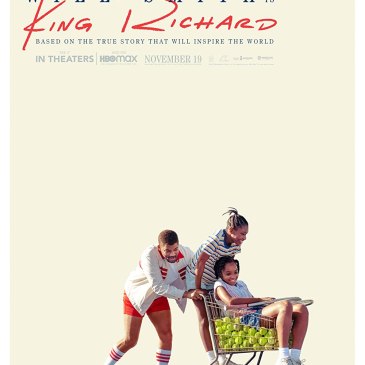
King Richard is Will Smith at his best: A complex portrait of a loving father

The triumphant story of two of the most famous athletes the world has ever known. Executive produced by both Williams sisters, it’s a biopic of their rise from humble upbringings in Compton, California to owning the whitest sport in the world of Tennis. However, it’s all framed through their guiding light and the ultimate cheerleader, their complex and loving father Richard Williams – aka King Richard. … More King Richard is Will Smith at his best: A complex portrait of a loving father

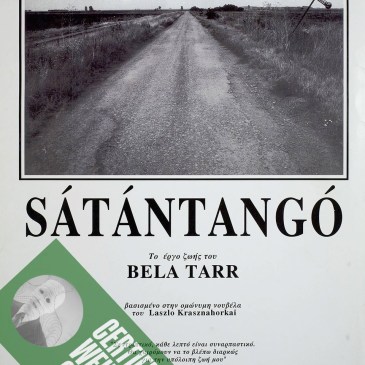
CERTIFIED WEIRD: Béla Tarr’s Sátántangó (1996) is a masterpiece

The seven-hour myopic, nihilistic, and dystopian Hungarian masterpiece from Béla Tarr, Sátántangó, captures a moment in time closer to the actual reality of the situation better than almost any other film in existence. It’s painfully long and exhausting, by design, and doesn’t take any creative liberties off the table. It’s a film with so much pessimism embedded into its code that any other line of thought is almost impermissible considering the circumstance and lack of authority. The shared apathy of the characters towards themselves, others, and their dire circumstance is a danger to all and Tarr explores this utter disconnect from the reality, a pseudo-reality showing people for what they are, not idealizing a piece of this story. It’s disheartening, cold in the depiction, constantly raining that never ceases to stop, creating an atmosphere of distrust and egocentricity that poison’s the town. It’s an impossibly cruel seven-hour watch and hard to imagine the film conceptually, but is the one film, outside of a similar project in terms of length and story structure, Masaki Kobayashi’s 9-hour masterpiece The Human Condition, that authentically conveys what it means to be human and the human disposition. It’s a towering achievement in storytelling and I’m incredibly happy art like this exist in the world. … More CERTIFIED WEIRD: Béla Tarr’s Sátántangó (1996) is a masterpiece

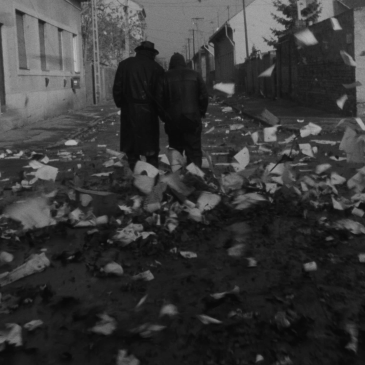
The Slow Storytelling of Bela Tarr’s Sátántangó and the nihilistic outlook

The establishing shot has become a mainstay of Tarr’s filmography. A sort of unexpressed realism, where he’s unafraid to show the journey, in its entirety, from one point to the next. He won’t cut away from the scene until the subject has safely reached their desired location. It’s not a reprieve for the audience or the filmmaker, it’s simply letting the action play out as it happened. At times, this type of slow-moving transition has thematic and narrative significance, but other times it’s meant solely to have the audience suffer alongside the character for extended stretches of time. … More The Slow Storytelling of Bela Tarr’s Sátántangó and the nihilistic outlook