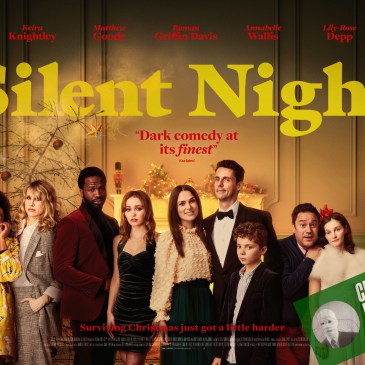
CERTIFIED WEIRD: Silent Night is an unbalanced black comedy with little laughs

The concept behind Camille Griffin’s holiday black comedy Silent Night had potential, but the tonal balance of the film betrays the comedy elements, melodrama, and warped sentimentality. It sets out to make a Hallmark moment Holiday extravaganza while looking directly into the eye of impending doom. The ensemble piece takes center stage at the end of the world slash Christmas get-together, as the script slowly but surely reveals more damning plot details.  … More CERTIFIED WEIRD: Silent Night is an unbalanced black comedy with little laughs

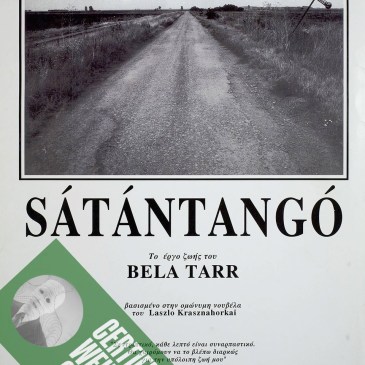
CERTIFIED WEIRD: Béla Tarr’s Sátántangó (1996) is a masterpiece

The seven-hour myopic, nihilistic, and dystopian Hungarian masterpiece from Béla Tarr, Sátántangó, captures a moment in time closer to the actual reality of the situation better than almost any other film in existence. It’s painfully long and exhausting, by design, and doesn’t take any creative liberties off the table. It’s a film with so much pessimism embedded into its code that any other line of thought is almost impermissible considering the circumstance and lack of authority. The shared apathy of the characters towards themselves, others, and their dire circumstance is a danger to all and Tarr explores this utter disconnect from the reality, a pseudo-reality showing people for what they are, not idealizing a piece of this story. It’s disheartening, cold in the depiction, constantly raining that never ceases to stop, creating an atmosphere of distrust and egocentricity that poison’s the town. It’s an impossibly cruel seven-hour watch and hard to imagine the film conceptually, but is the one film, outside of a similar project in terms of length and story structure, Masaki Kobayashi’s 9-hour masterpiece The Human Condition, that authentically conveys what it means to be human and the human disposition. It’s a towering achievement in storytelling and I’m incredibly happy art like this exist in the world. … More CERTIFIED WEIRD: Béla Tarr’s Sátántangó (1996) is a masterpiece
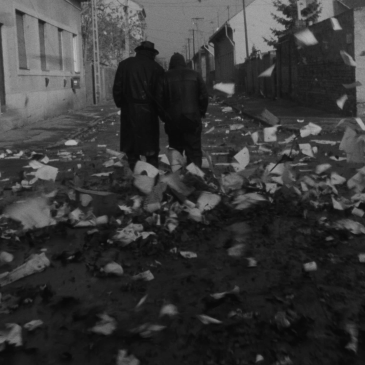
The Slow Storytelling of Bela Tarr’s Sátántangó and the nihilistic outlook

The establishing shot has become a mainstay of Tarr’s filmography. A sort of unexpressed realism, where he’s unafraid to show the journey, in its entirety, from one point to the next. He won’t cut away from the scene until the subject has safely reached their desired location. It’s not a reprieve for the audience or the filmmaker, it’s simply letting the action play out as it happened. At times, this type of slow-moving transition has thematic and narrative significance, but other times it’s meant solely to have the audience suffer alongside the character for extended stretches of time. … More The Slow Storytelling of Bela Tarr’s Sátántangó and the nihilistic outlook

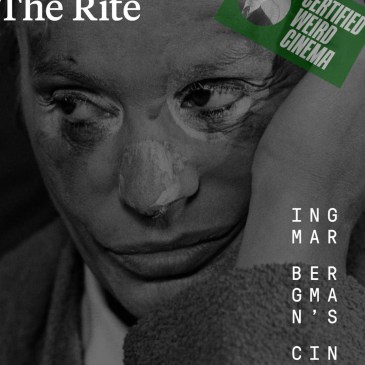
CERTIFIED WEIRD: Ingmar Bergman pushes the limits of provocation with his made-for-TV-movie The Rite (1969)

It all culminates in the presentation of the act – a mock-pagan staging, with the overdramatized, blasphemous masks and costumes, leads to mock-pornography that purposefully provokes. … More CERTIFIED WEIRD: Ingmar Bergman pushes the limits of provocation with his made-for-TV-movie The Rite (1969)

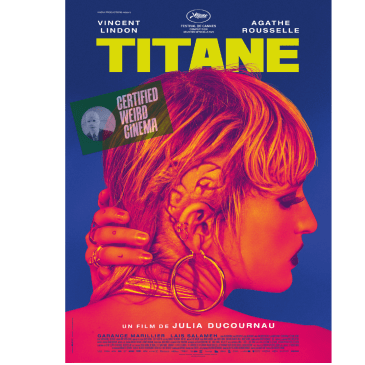
CERTIFIED WEIRD: Cannes Palme d’Or Winner Titane Marks the 2021 Highpoint of Weird Cinema

Titane is an acid-laced experience, hard to describe in exact words the sensation of it. Julia Ducournau’s body horror, Palme d’Or winning film takes the completely unhinged premise of a symbiotic relationship between woman and machine, slaps on a complex human drama, and lingers on the one question that holds your attention to the last moment. Outside of the batty story, the sheer energy of the filmmaking and performances give way to a strange type of horror that is unconventional. … More CERTIFIED WEIRD: Cannes Palme d’Or Winner Titane Marks the 2021 Highpoint of Weird Cinema