Tormented (1960)
Director: Burt I. Gordon
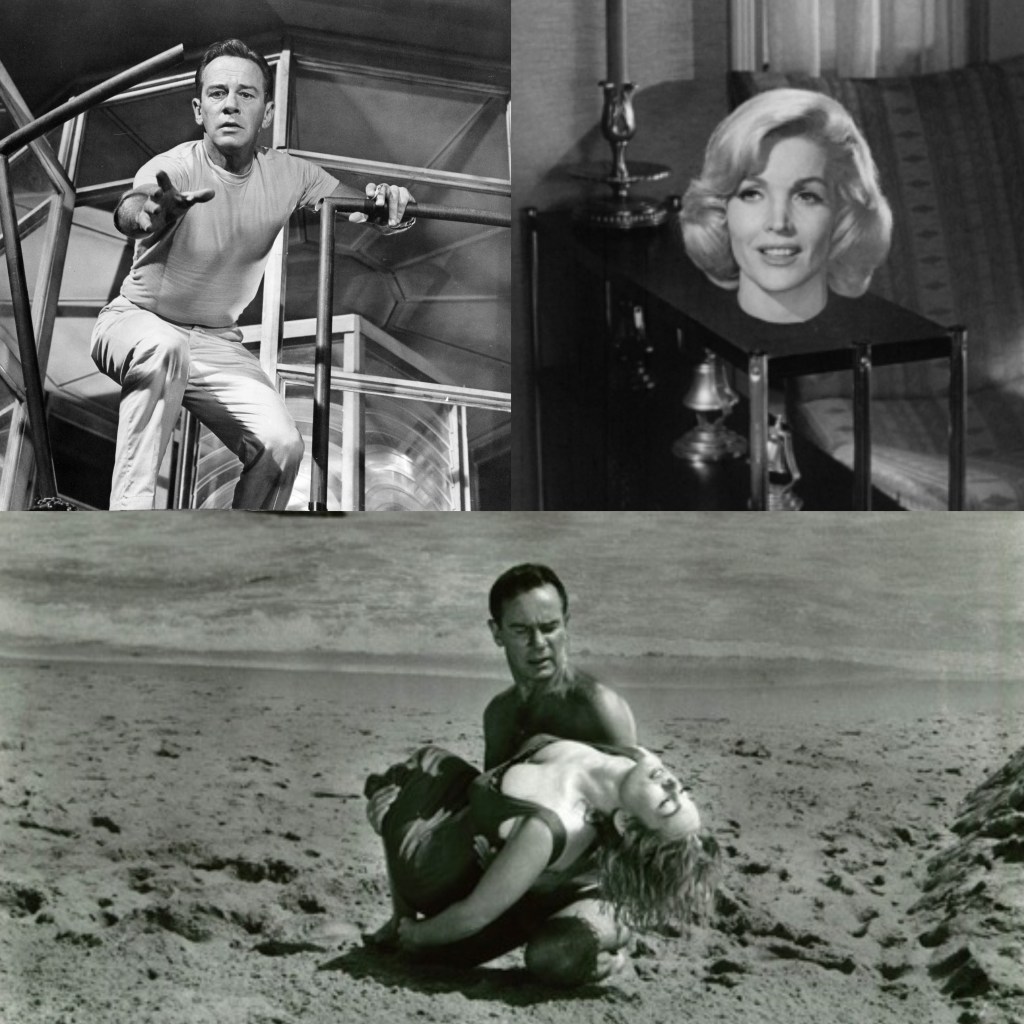
The premise of this movie centers around meetings at a lighthouse. For no reason in particular, the film opens up with Richard Carlson’s character arguing with his then side piece, Vi (Juli Reding), at this lighthouse. It becomes the film landmark and principal location, but it feels so…weird? Like, why is the screenplay written with so many scenes at this location? It feels odd to have one, let alone two. It might not seem like a big deal but even this small little detail makes everything else look shoddy. However, it’s not all bad. The ghost scenes after Vi dies at that very lighthouse are effectively executed with layered sound and visual effects. The floating head aesthetic isn’t necessarily scary but its a novel concept that they pull off well. It’s not a great film overall, but it has its moments. The writing is terrible but they shoot their shot…at the lighthouse. It’s trapped between a noir and a horror and doesn’t get the best out of either genre.
Rating: ☆☆ (39)
Verdict: not weird
This Woman is Dangerous (1951)
Director: Felix E. Feist
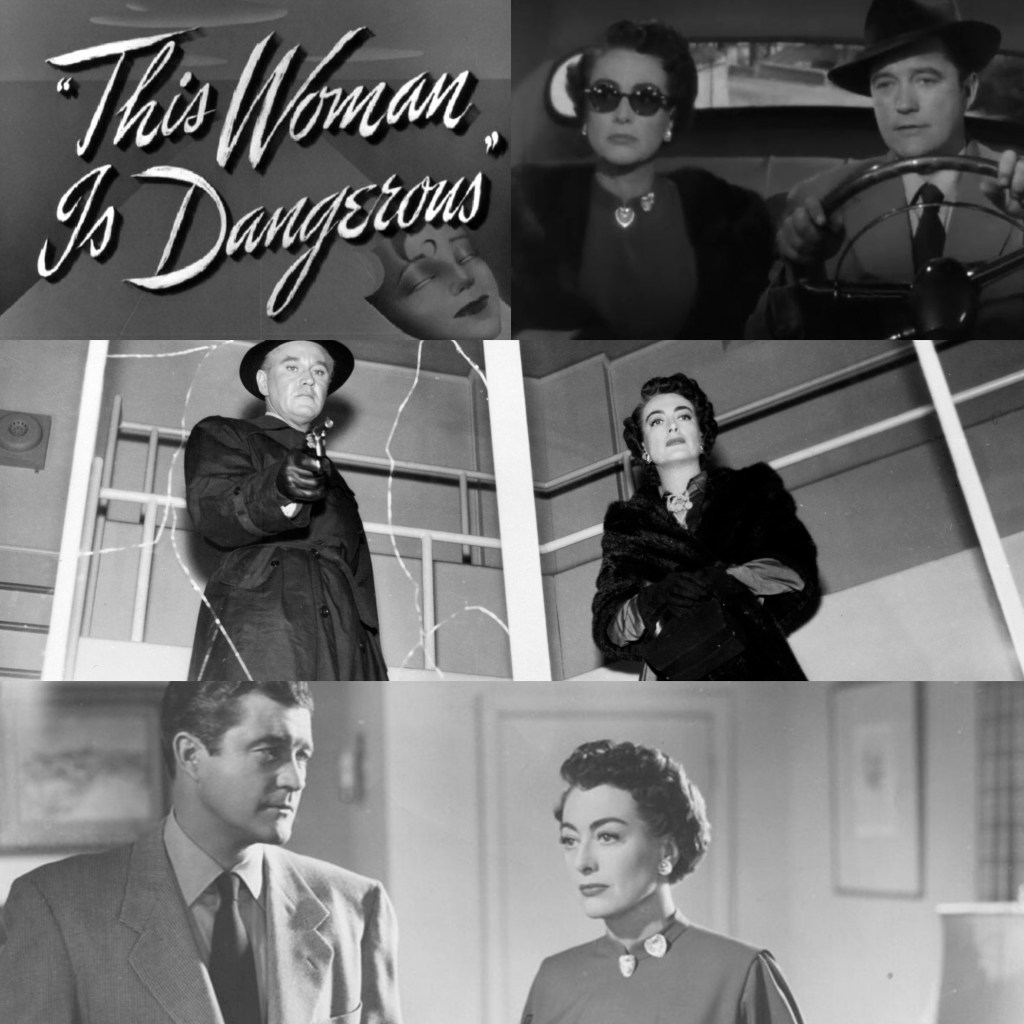
the run of Joan Crawford noir pictures at Warner Bros comes to a close here as she gets out of her contract. After playing many shady but powerful women in the same vein as Mildred Pierce, she had enough of the femme fatale. And WB’s were losing money on these pictures, which of course, signified that Jack Warner needed to get out of this contract.
As for the film, it’s a fairly typical noir, not going above and beyond with the shots, but tells a compelling love-triangle story. Crawford as the muse, while two men unknowingly wage war despite no need for such violence. Crawford pits a moral doctor (Dennis Morgan) against the immoral mobster (David Brian) and the tension is captured in this unpronounced rivalry. The story becomes more about misunderstanding and miscommunication rather than fiery passion. With such extreme emotion, the plot being driven by such thin story beats lessened thie impact of the entire picture. Especially the ending, that all hinges on the threat of danger, when the truth is much calmer and resolved. The final shoot out isn’t revelatory or expressive, it’s more frustrating. While the love triangle dynamic is intriguing, the story fails to land on its feet with a fairly typical and uneventful conclusion for these characters.
Rating: ☆☆☆ (79)
Verdict: not weird
Deception (1946)
Director: Irving Rapper
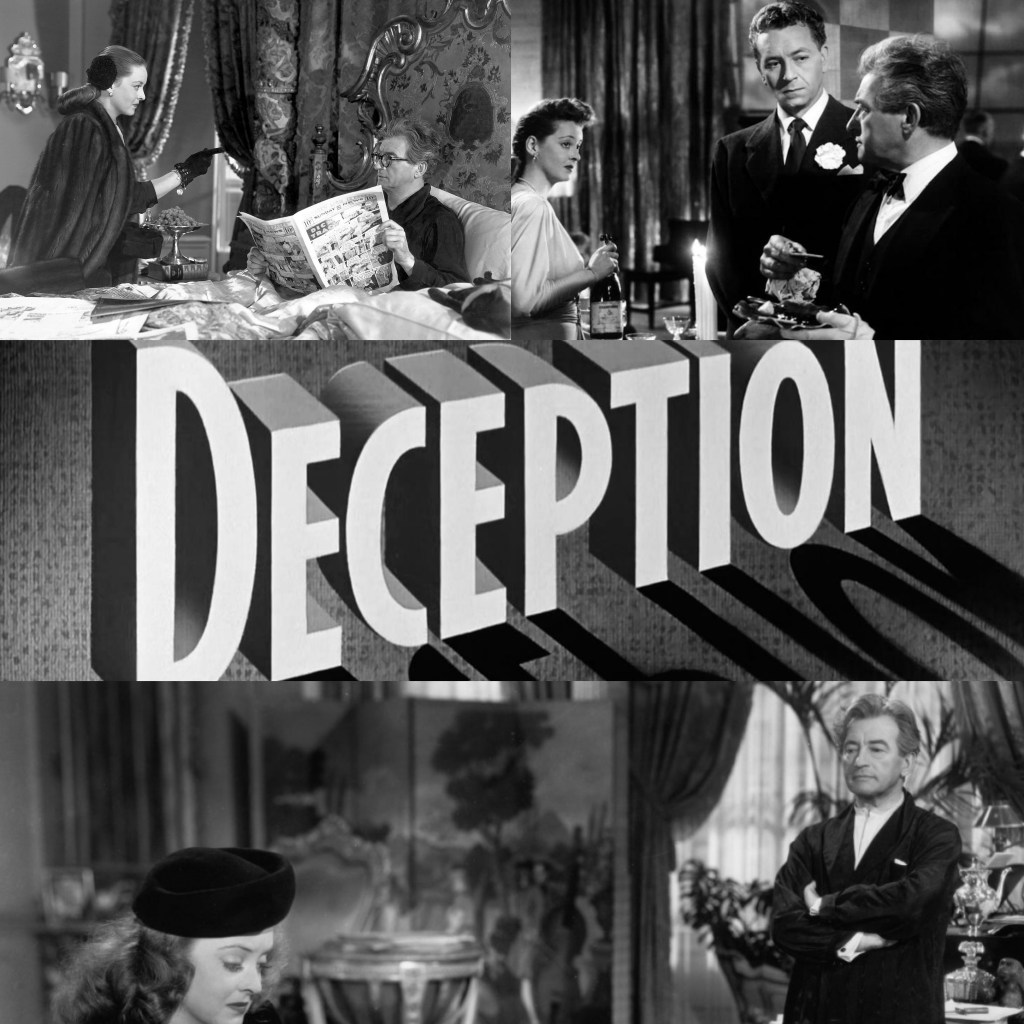
the returning spouse narrative is center stage through Irving Rapper’s tale of deception. A glorious gripping vehicle for the legendary Bette Davis as the widow stuck between two dashing and intelligent men vying for her attention. Written to be a convoluted, concealing journey through current day and past lives. Moreover, the script, with excellent dialogue and character development, allows the Casablanca trio to thrive — especially Claude Rains, who plays a sophisticated composer with a knack for abusing his status and power. With little visual imagination, mainly shot-reverse shot setups and plenty of master shots, the script and character work needs to carry the film. It does in certain instances, especially with Rains involved, as he takes this charming pseudo-intellectual for a spin with energy and subtle anger. While Paul Henreid is a flat board providing no personality in his acting. As for Davis, she straddles the line between them professionally, never cueing in the audience or drawing their attention. It’s a hidden performance, not giving the audience what they want with clarity. Rapper makes sure to hold that clarity till a later point and draw out the tension. It doesn’t all work, but it works enough to give this fake noir film it’s flavor. Fun experience but not one I’ll revisit soon

