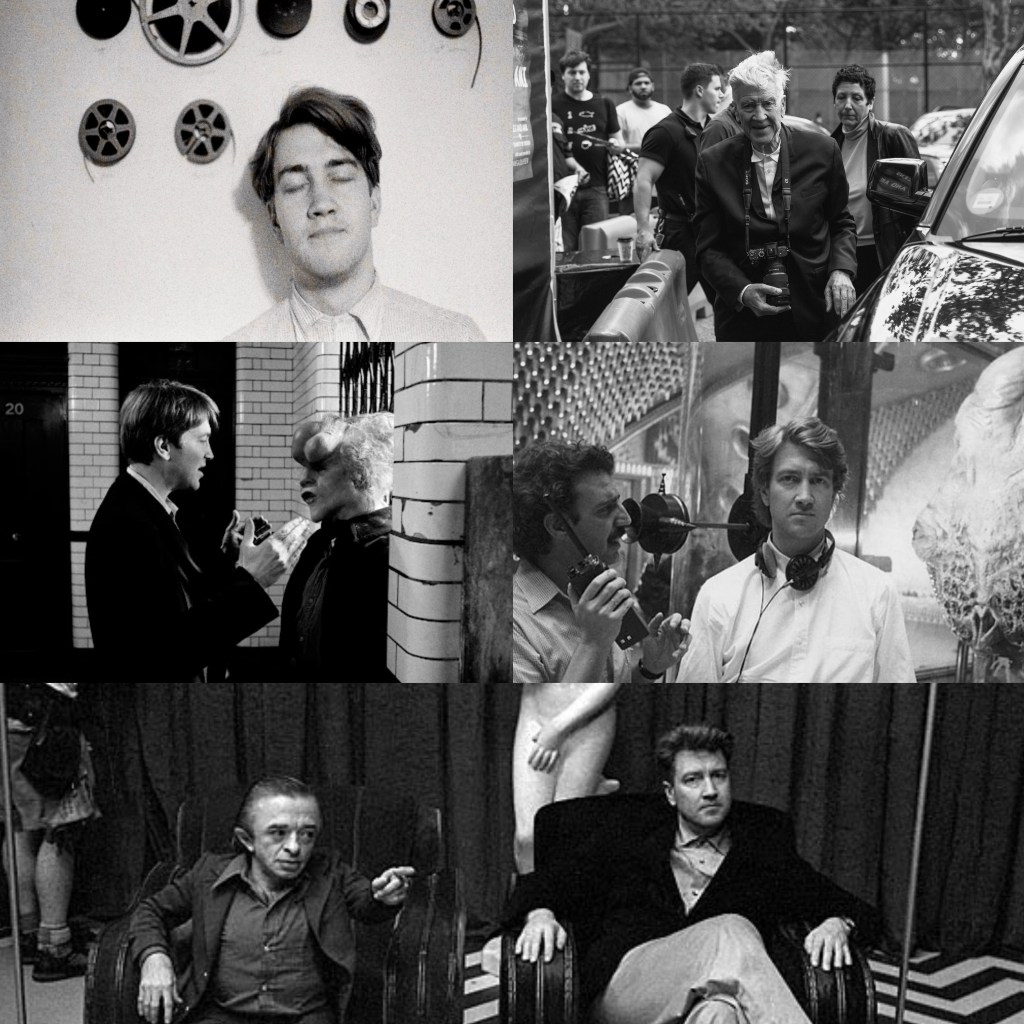
David Lynch has passed away at 79 years of age. The American surrealist, director, poet, weatherman…lived a life of pure absurdity, happy and free.
In his work and life, Lynch exemplified unfiltered authenticity as if every word or scene came from his soul. When he talks about transcendental meditation, he speaks about an ocean of unconscious thought and how ideas come from this ocean. He speaks as a fisherman who catches ideas as they come into the subconscious mind. He brings this ocean to Twin Peaks: The Return as Cooper is trapped there.
Early Works of David Lynch
His philosophy of life bleeds into his art and has influenced countless creatives. For me, it all started with Eraserhead (1977), a fever dream, cheery, dark, grotesque, and occasional hysterics, David Lynch’s debut which took him years to complete is an untouched masterwork of surrealist horror. Untouched in the way all Lynch media is untouched: his purposeful evasion of any question with the premise of narrative explanation or meaning to his work. Many context clues and images relate to the struggle of fatherhood and the inability to be there for the child. Yet, that’s certainly not a fact and with Lynch’s death, the truth dies with him – for good, for all of humanity.
Speaking of humanity, his second feature The Elephant Man (1980) is the work of a humanist. The work of someone with empathy for the vulnerable. A rousing success for Lynch in his sophomore feature, not only a box office one, but a stark departure from his debut film and still manages to bend to the narrative’s whims. In his most straightforward story, Lynch captures the sheer animosity the disfigured should feel towards humanity and the journey to a place of understanding. Even when Lynch does more conventionally structured films, the subject matter continues to focus on outcast characters.
This is some of Lynch's finest work and a damn fine job from John Hurt.
The building of tension, the unrelenting embarrassment, the dramatic misunderstanding, and the incredibly heartfelt line delivery from Hurt. One of the best scenes EVER. pic.twitter.com/cFl60dTNqp
Then, Dune (1984) hits and showcases that maybe studio sci-fi isn’t a fit for his sensibilities. Lynch disavowed the project and promised to never work for studios again. However, for some (me), Dune is a funny-bad movie that entertains more than a majority of films. There are some instances of Lynch’s influence on the editing, voiceovers, and atmosphere but rarely prominent elsewhere. Regardless, Dune brought Kyle MacLachlan and Lynch together for the first time, and that in and of itself is a triumph.
For one Dune disaster, we were afforded the greatest dream imaginable, The American Dream. White picket fence suburban comfort hiding an underbelly of dirt and darkness. Enter Blue Velvet (1986), the film that inadvertently set Lynch on a path that led to some of the greatest works in the history of the medium. Exactly as described, Blue Velvet explores the voyeuristic suburban angst and trouble under the veil of boyhood fascination and exploration. The tone, setting and type of story in Blue Velvet somehow sold ABC executives on the idea of a TV show
Twin Peaks
The quintessential David Lynch project. The one that best incorporates his storytelling, spirit, weirdness, and thematic drive. A story that has all his aesthetic sensibilities, character, and setting. Taking inspiration from Blue Velvet’s suburban nightmare, Twin Peaks (1990) is another small-town story that wants the audience to live in the turmoil of death and grief but through the melodramatic soap operatic lens of a telenovela.
Twin Peaks features a supernatural influence that has seemingly gravitated over to his other stories. The Black and White Lodge is the center of the Twin Peaks world alongside the death of Laura Palmer and the origin of all evil, Bob. The lodges are iconic locations in Lynch’s universe and in my perspective, the people from the lodge appear all over Lynch’s filmography one way or the other.
As for Twin Peaks’ influence on the art world, the impact it had is incalculable. In television alone, it started an era of storytelling that allowed the medium to break far outside conventions, away from episodic and introducing ambiguity into an hour-long program. A program that ran on ABC before it was canceled by then-CEO, Bob Iger of Disney fame. In the story and real-time, Twin Peaks remained dormant for 25 years, leaving the audience on the cliffhanger of all cliffhangers.
Enter: The Return. The single greatest piece of visual art ever created. 18 hours of pure cinematic bliss in all its bizarre and unexplainable forms. Unhinged Kyle MacLachlan playing three parts of a single character, all masterfully done. Spending hours with Dougie “Jackpot” Jones and his blank expression. Slowly moving and thoughtless but with the devil’s luck. Episode 8, the creation of all evil in the world and the birth of Bob. Single greatest hour of television in history? The final episodes between Dale Cooper and the real-life Sheryl Lee blend fiction and reality, unlike any piece of fiction. Mind-altering work from David Lynch.
In the same year Lynch launched Twin Peaks, he premiered his first Laura Dern film starring none other than the great Nicholas Cage Wild At Heart (1990) which won the Palme d’Or at the Cannes Film Festival. For me personally, Wild at Heart is lesser than Lynch but it endearling showcases his deep love for The Wizard of Oz (1939) and the main influence on his creative mind.
In Wild at Heart, Nic Cage follows the yellow brick road wearing his jacket
“This jacket here represents a symbol of my individuality and my belief in personal freedom?”
After Wild at Heart, he returned to the world of Twin Peaks in 1992 with his prequel film, Twin Peaks: Fire Walk With Me. Rudely booed at Cannes, the time has been kind to the film, and those critics who panned the film made it look foolish. Esoteric, yes, but in the context of Twin Peaks, it’s the best tool for understanding the motivations driving the world and a ravishing surrealist drama unfolding, Fire Walk With Me serves as a decipher for the rest of the mystery. A Kyle MacLachlan-less film surprised critics, but what Sheryl Lee showcases here is traumatic resonance trapped in a nightmare.
Four scenes from David Lynch's "Twin Peaks: Fire Walk With Me" (1992)
The film opens with the hypnotic saxophone from Angelo Badalamenti. A soothing, melancholic melody that expresses sorrow. It's set against the backdrop of TV static, the main driving force of Twin Peaks pic.twitter.com/BBWBxNrPFz
Five years following, Lynch came back with a post-modern surrealist fever dream built off stalker anxiety and split personality in Lost Highway (1997). Two distinct halves make up this film, Bill Pullman driving the first half and Balthazar Getty in the second. Patricia Arquette mysteriously appeared on both sides of the film. Driven by a man under the moniker of Mystery Man, Lost Highway is maybe Lynch’s most distant and inaccessible, but still a rather provocative film with moments of pure brilliance throughout. Pullman’s section is far superior to the second half and that’s the film’s main criticism.
As for a welcomed career detour, The Straight Story (1999) is a marvel in several ways. First, it manages to maintain Lynch’s identity with obtrusive long takes, uncomfortable worldbuilding, and curmudgeon characters while managing to adhere to Disney principles. Slow, boring cinema purposefully done to invest in the journey. Richard Farnsworth’s unflinching, slow-witted but committed performance is fantastic.
The Magnum Opus: Mulholland Drive
Next film he premiered, many would consider Lynch’s magnum opus and the culmination of years curating this abstract style of storytelling. Mulholland Drive (2001) is a dream within a dream in a Hollywood nightmare. Lynch;s storytelling stems from the concept that the idea of a story itself give birth to all other story beats and all one has to do is follow those ideas to their logical conclusion. The idea itself? An unsolvable mystery that dies with his passing too.
What is presented as the idealistic Hollywood dream in Mulholland Drive, in reality, is a delusional woman’s daydream. Naomi Watts is a supremely talented actress and she continually surprises in her career, especially when working with David Lynch. Speaking of Watts, you should hear her impression of David.
Hearing David Foster Wallace describe his love for David Lynch is the relatable content I'm here for pic.twitter.com/WHToIY5xK4
Nonetheless, Mulholland Drive has too many abstract details to remember. The hobo outside Winkie’s Diner, the blue box, the Cowboy, Mr. Roque…Lynch stuffed the film with clues and no easy explanations. Yet, Mulholland Drive feels more attainable than some of his other pieces (like the next film on the list) and can be explained if you view the film through the lens of a metaphor. Lynch uses the film to look inward at Hollywood and its perverse casting practices. The entire premise stews in this dilemma and it drives Naomi Watts to madness.
Late Career Lynch
To end this trip down the yellow brick lane, Lynch returned five years after his rousing success with Mulholland Drive and shot a movie on digital for convenience without a fully functioning script, at least according to Bruce Dern. Inland Empire (2006) is a stream-of-consciousness film that is messy on the surface with a wildly inconsistent structure. Still, the details, plot, and performances all provide a deep exploration of the darkness that presides over all Lynch creations.
Laura Dern, once again as a conduit for Lynch’s exploration of Hollywood’s dark side, is a cursed actress in a role that swallows up the actresses that dare to play. It’s Lynch’s most inaccessible films and that makes it both invigorating and frustrating but mostly fascinating. Lynch incorporates his Rabbits shorts and makes them part of the plot. Sensationally deranged magic of a sitcom setup that relates to the plot. The perfect 2 am film – watch with a certain vice of your choosing and your mind will be blown to smithereens.
David Lynch, the artist, will live on forever
As for closing words on David Lynch, he was as free of a spirit in his creative career and personal life as possible. He continually worked with people he knew and trusted and was constantly surrounded by loyalty and love. All of this bleeds into his work and that’s why we as audience loved him so dearly.
With only shorts released after The Return went off-air in 2017, the last scene of David Lynch’s career is Kyle MacLachlan and Sheryl Lee staring upwards at Laura Palmer’s childhood house before an earth-shattering scream and the house shutting off like a television set, Lynch’s career came to a booming finish.
Rest in Peace David Lynch
It's David Lynch's 75th birthday
"It's so beautiful for me to think about. These pictures and sounds flowing along together in time and sequence. Making a thing that can really only be said in cinema"